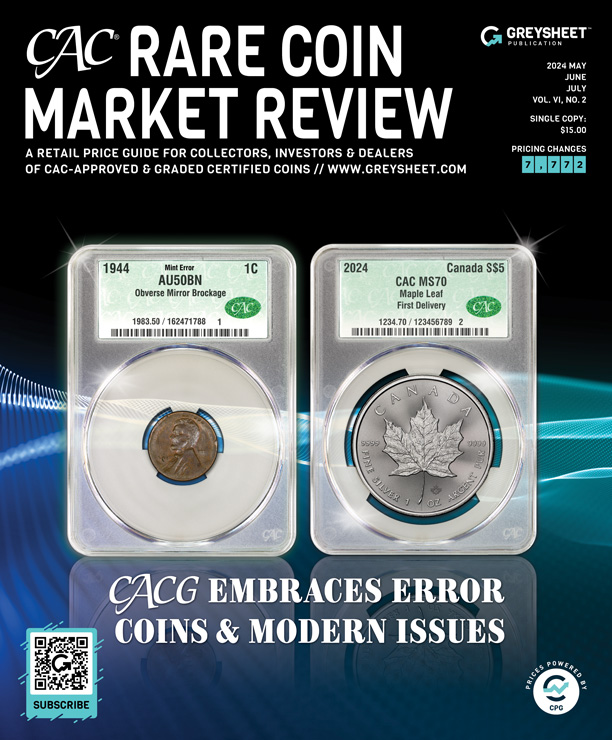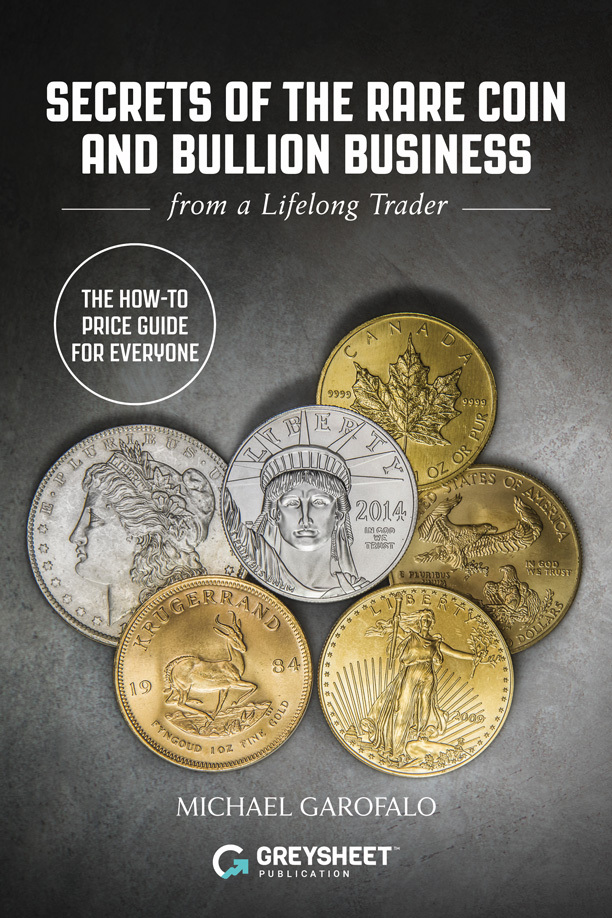
The Coin Dealer Newsletter - the Greysheet, Bluesheet and Greensheet. Publishing wholesale price guides for all U.S. coins (copper, nickel, silver and gold), bullion (gold, silver and platinum), certified coins (PCGS, NGC, ANACS, PCI, ICG, SEGS, NCI and INS), and currency (paper money).  |  Search online through the CDN archives for numismatic subjects. Choose from the weekly Coin Dealer Newsletter (Greysheet), first published June 14, 1963, the CDN Monthly Supplement, first published August 1976, the monthly Currency Dealer Newsletter (Greensheet), first published September 1980, or the weekly Certified Coin Dealer Newsletter (Bluesheet), first published August 22, 1986.  |  Recent articles from the CDN family of publications, covering the state of the current coin market, Bid prices, coin dealer wholesale Asks, and subjects related to Numismatics: Coin collecting, investing, buying, selling, auctioning, as well as the subject of collectible currency, or paper money.  |  Subscribe to the Coin Dealer Newsletter - Greysheet, a rare coin price guide on Morgan, Peace, Eisenhower and Anthony Dollars, Walking Liberty, Franklin and Kennedy Halves, Liberty Seated, Barber, and Washington Quarters including the commemorative 50 State Quarters, Mercury, Roosevelt Dimes, Shield, Buffalo, Jefferson Nickels, Indian, Lincoln Cents. Also coverage of Proof and Mint State Type.The Certified Coin Dealer Newsletter - Bluesheet reports weekly on the sight-unseen rare coin market for grading services: PCGS, NGC, ANACS, PCI, ICG, SEGS, NCI and INS.The Currency Dealer Newsletter - Greensheet a monthly paper money price guide.  |  A series of books reporting complete historic Bids graphed from 1980 through today providing record high coin prices as well as historic low prices for: Saint-Gaudens, Barber Dimes, Barber Quarters, Barber Half Dollars, Walking Liberty Half Dollars, Mercury Dimes, Circulated and Uncirculated Buffalo Nickels, Proof Type, Mint State Type, Gold Type, Silver Commemoratives, Morgan Dollars, Deep Mirror Prooflike (DMPL) Morgan Dollars, Peace Dollars, Gold Commemoratives, and Proof Gold Type coins.  |  Not ready to subscribe? Receive all seven of the Coin Dealer Newsletter Family of Publications current issues, which include the Coin Dealer Newsletter (Greysheet), the CDN Monthly Supplement, the CDN Quarterly I, II and III, the Certified Coin Dealer Newsletter (Bluesheet), and the Currency Dealer Newsletter (Greensheet) - all for only $13.75 (Save Over $18!). For just $5 more, order the Custom Deluxe Binder to keep all your CDN Newsletters organized.  |   |  CDNi the only online price guide for wholesale Bids and Asks on rare coins and currency. Register or Login here with your User ID and Password. View newsletters online, the day they are mailed.  |  The Coin Dealer Newsletter, also known as the Greysheet (because it is printed on grey paper), is the only up-to-date wholesale price guide covering U.S. coins (certified or raw). Published weekly providing coin dealers, collectors and investors with the information they need to make informed buying and selling decisions.   
The Coin Dealer Newsletter -CDN-Publishes the Greysheet (including the CDN Monthly Supplement and the CDN Quarterly I, II and III). The Certified Coin Dealer Newsletter - Bluesheet - reports on the sight-unseeen certified coin market for PCGS, NGC, PCI, ICG, SEGS, ANACS, ICG, SEGS, NCI and PCI graded coins. The Currency Dealer Newsletter, or Greensheet, provides monthly wholesale prices for the U.S. Paper Money market.Subscribe today and cost of the subscription could be covered with your first informed purchase or sale.
CDN family of publications offers valuable reference books on historic coin prices. The CDN Graph Books cover the most actively traded U.S. coins. The Numismatic Dealer Directory, now in its eleventh year of publication, includes over 5,000 coin dealer addresses, phone and fax numbers as well as select web-site and email addresses. You can receive this valuable numismatic "phone book" Free when you subscribe for at least one year to any CDN Publication.
Search online through the CDN archives for numismatic subjects.Find out which newsletters include coverage on your coins using the CDN Coin Index.Find a coin dealer in your neighborhood by searching through the online version of the NDD - Numismatic Dealer Directory.
Use our secure order forms to subscribe, buy current issues, order CDN Graph Books, order back-issues, or buy access to our online price guides CDNi. Not sure what to order? Request a free sample to look at.
You MUST use Adobe Acrobat Reader to view our newsletter online. If you don't have it, you can download it for FREE!
CDN has been publishing the Greysheet since 1963! We pride ourselves on continuing to be Accurate, Timely, Unbiased, and Reliable. Because of our constant Integrity, our reputation speaks for itself. We are located in beautiful, Southern California, on the coast of the Pacific Ocean. If you would like to join our team and receive competitive compensation and benefits in a great environment, contact us now!
VeriSign Secure This Site
Greensheet


DMPL Dollars
Popular And Rare

by Don Rinkor


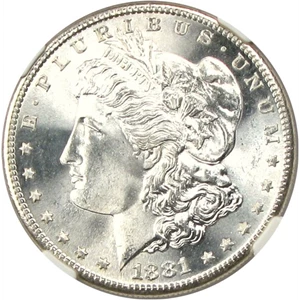
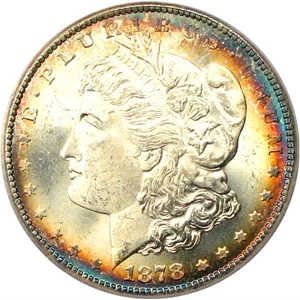
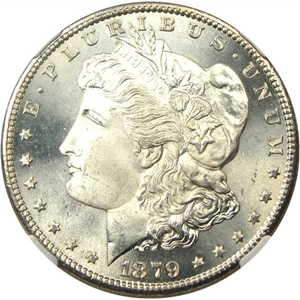
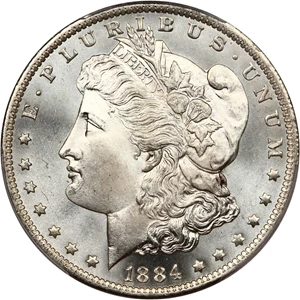
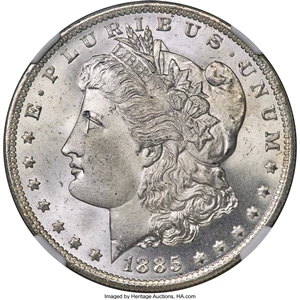
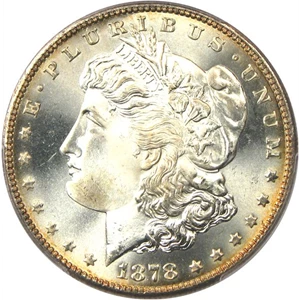
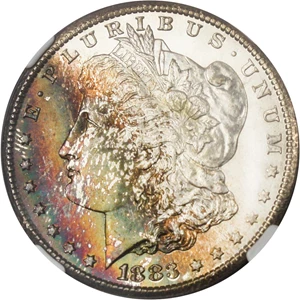
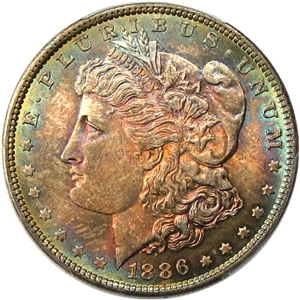
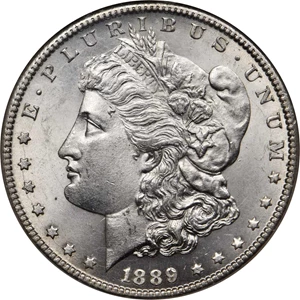
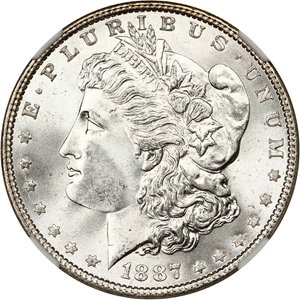
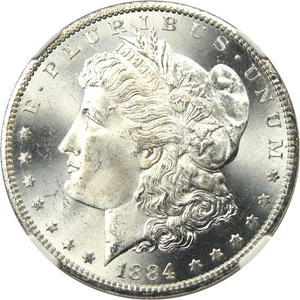
        One of the strongest and best performing segments of the rare coin market has been DMPL Morgan Dollars. Almost weekly for the past few years, the Greysheet has mentioned the strong demand and higher prices for these amazing numismatic jewels. Population levels for many dates have not changed in almost a decade. Even dates that are considered more common have only increased slightly. With the limited number of certified DMPL Dollars available to the marketplace, and the number of sharp collectors and investors increasing the demand, you can well imagine the “Perfect Storm”. Population levels mentioned in this article are based on the PCGS report for June, 2008.

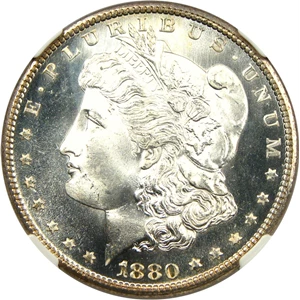
        DMPL represents the abbreviation for Deep Mirror Proof Like, and this designation is awarded to Morgan Dollars that possess a minimum of 4" of clear reflection in the fields. The PL designation for Proof Like is given for coins that have only 2" to 4" of reflection. While the determination for either is somewhat subjective, the grading services have become much more conservative over the past several years. Because of this, fewer DMPL Dollars have been certified as such.

        While you will find a few PL and DMPL coins in other denominations, the Morgan Dollar series has shown to have produced the greatest number of Proof Like business strikes. Even among the other Dollars struck in the past 200+ years, you will find only a few Seated Liberty or Trade Dollars with Proof Like characteristics. Small Size Gold coins may also be found with PL and DMPL surfaces. These too are quite rare, but not designated as Proof Like by PCGS.

        How does a business strike Silver Dollar made for general circulation look like a Proof coin? The process used at the Mint to produce circulating Dollars included the polishing of the dies on a regular basis. Each time the dies were polished, the first couple hundred Dollars would be struck with Proof Like fields. As more Dollars were struck, the dies became less polished and the subsequent Dollars had a frostier surface. Each time a freshly prepared die was replaced, a similar result would occur. A number of dates in the series show visible flaws as a result of too much die polishing. This will often result in a coin being graded only PL rather than DMPL since this will affect the reflection of the mirrored fields. Die polishing looks like very fine lines all running the same direction which are raised on the coin, and should not be confused with hairlines from mishandling or cleaning.

        Not all dates in the Morgan Dollar series are represented by PLs or DMPLs. Die preparation was not consistent over the 28 different years the Mint struck Morgan Dollars. Add to this the fact that Dollars were struck at 5 different mints. The cleaning process of the planchets, striking pressure of the equipment, and other factors were constantly changing. The end result is that some dates will have quite a number of Proof Likes while others will have few. It is amazing to consider how these incredible Dollars were able to survive the handling of Mint employees and being transported around the country in horsedrawn wagons. The minor contact marks that are visible on Mint State Dollars, with frosted surfaces, are magnified on a Dollar with reflective fields. Few DMPL Dollars exist in MS66 or higher because of this. While grading standards are the same for both DMPL and non DMPL Dollars, one has a very significant disadvantage for survival in high grade.

        The absolute king of DMPL Dollars are the handful of coins described as “Black & White”. This description is used for coins that display intense frost on the devices and ultra deep mirrors. The coin actually looks like the frosted devices are floating on a black sea. Stunning to behold and prized by DMPL Dollar collectors, these are extremely rare and represent only a few coins out of a hundred on average. Values will often run at multiples of Bid levels compared to examples that are not Black & White. The availability of these treasured B & W DMPLs is extremely limited, and they are seldom offered for sale.

        Morgan Dollars from 1896 to 1904 will rarely display much in the way of contrast. While you may find a few “O” Mint Dollars sporting cameos, most dates have little to none. A coin in this date range with strong contrast will bring many multiples of Bid levels, as they are very rare. Without the cameo look to these later dates, the Dollars tend to be a bit boring in the eye appeal department. While this may be the case, these dates are actually very rare, with miniscule populations. The entire post 1900 population in DMPL is only 201 coins in all grades, if you do not include the 1904-O. In the past 7 years, the population of post 1900 DMPLs has increased by only 9 coins. Did I mention these are rare? Even at the increased Bid levels, these dates remain significantly under-valued.

        One might assume that the population levels of all dates in DMPL would have increased significantly over the past 7 years. This assumption would be incorrect. Here are a few specific dates in MS64 and MS65 DMPL to consider that show limited population increase in this period. Even some dates in MS64 DMPL have shown very small population growth.

        As you may notice, there are actually some dates that have fewer coins than 7 years ago. This may seem odd, but coins can be upgraded, crossed to another service, or possibly removed from DMPL holders by PCGS because they don’t meet current standards. Let’s consider the population growth for some of the more common dates in the series. Other than the 1885, there have been few new DMPLs graded at these levels in 7 years. That is simply amazing when you consider how many Morgan Dollars were struck and survive in Mint State today.

        The segment that has had the greatest increase in population levels is actually the common date Carson City Dollars in DMPL. The total Carson City coins graded as DMPL by PCGS has increased by 22% over the past 7 years. This compares to an increase of only 14% for all the other dates in DMPL over the same time period.

        Even the slightly tougher date 1881-CC and the 1885-CC have increased by 23% and 34% in the same time period, respectively. The reason for these dramatic increases is obvious. A huge portion of the Dollars sold in the GSA auctions of the 70’s were PLs and DMPLs. Since these coins didn’t travel anywhere and sat undisturbed for almost 90 years, there are numerous Proof Like examples. Many awesome DMPLs are still in the original GSA cases and have yet to be submitted for grading. This will mean that the population levels for the most common Carson City Dollars will continue to rise. Since “CC” Dollars are popular with collectors, their prices in DMPL have remained steady. Common date “CCs” have not increased in price at the MS64 DMPL level in the past 2 years. In MS65 DMPL, they have increased from 10% for the 1882-CC, to 25% for the 1883-CC and 1884-CC. This is a much lower increase than the non Carson City Dollars. The 1885-CC is Bid at almost 9% lower than 2 years ago. The only other coins that are Bid at lower levels are Carson City Dollars from 1890-CC, and 1891-CC in MS63 and MS64 DMPL. The 1892-CC has remained at the same Bid levels in those grades. While Bid levels may be a bit soft on these dates, nice coins will still bring strong premiums. This is very evident in the 1890-CC to 1892-CC range, where a 15% to 20% premium is not uncommon. The 1883-CC Dollar in MS65 DMPL with 628 pieces is now the highest population date in that grade, exceeding even the common 1880-S.

        Let’s take a look at the high grade DMPL Dollars and the value they represent. You might think that 1,052 Dollars from all dates in MS66 DMPL is a lot of coins, but if you consider that only the 1880-S, 1881-S, 1883-CC and 1884-CC Dollars have populations over 100 coins in that grade, that is not a lot of coins. DMPLs represent only 1.9% of all MS66 Dollars graded by PCGS. The percentage in MS65 DMPL is similar at 1.8% of the total MS65 population. There are only 63 MS67 DMPL Dollars, and the 1880-S represents 26 pieces. That translates into 1% of the remaining date range MS67s grading DMPL. Did I mention these are rare? Yes I did!!!

        We have seen the price levels for PLs and DMPLs explode in just the past couple years. Even what some would consider as common dates have increased over 40% since September of 2006. Many of the rarer dates have increased from 50% to nearly 300% during the same time period. Supply and demand is the name of the game here, and the supply is well short of the demand. If you consider that a common date 1880-S in MS65 is currently Bid at $139, you would think that a DMPL in the same grade would be worth over 50 times that price. That would represent $7,000 if you compare price to population. Is this crazy or what?

        Nearly 4 years ago I wrote a similar article that was published by CDN. The article was titled, “Deep Mirror Proof Like Dollars, Undervalued & In Demand.” I guess that hasn’t changed a bit, and in reality, the market demand has increased by multiples. With the advent of registry sets, the number of collectors has exploded. Add to this the casual investor and the guy that just loves to buy the prettiest coins he can find, and you can see the writing on the wall.

        Another indicator that has substantiated the red hot DMPL market is with the major auction houses. The number of DMPL Dollars offered by these companies in their auctions has dwindled to where there may be no better or even slightly better date DMPLs auctioned. Even the common dates have declined in eye appeal over the past few years with attractive coins seldom offered. It is amazing to look over 500+ lots of Morgan Dollars and find only a couple coins worth buying. The end result is that the few attractive pieces will sell at very high levels.

        Walking the bourse reveals the same sobering reality. Few, if any, really cool DMPLs can be found. Rare dates and even attractive common dates will disappear quickly when displayed. Because of this phenomenon, attractive PL Dollars are also seeing very strong demand. While not quite as dramatic in eye appeal as their big brother, PLs offer a solid buy if they have the right look. Population levels are so small on some DMPLs that the only possibility for some dates and Mint marks is a PL Dollar.

        So, why collect PL and DMPL Dollars? The incredible beauty is, by far, the best reason. The added appeal of collecting what you love, and the potential for that passion to result in a good investment, does not always coincide. If you should chose to build a complete set of Morgan Dollars in PL and DMPL, you will need to be prepared for the adventure. It will not happen quickly, but the end result will be a very impressive and rare collection you can be very proud of. The key to collecting and investing in DMPL Dollars is to remember that it is all about eye appeal.


Don Rinkor Rare Coins
2600 Mendocino Ave. • Santa Rosa, CA 95403
707-546-2575 • Fax: 707-546-2545

Reprinted from the September 12, 2008 issue #9 of the CDN Monthly Supplement
This article is copyrighted and may not be reproduced without express permission from CDN publications. ©2008 CDN Inc.
Listed In 2008 NDD

| Recent Articles | Subscribe Now! | $4 Current Issue | Special Offer | Online Price Guide |
| CDNi | Back Issues | Sample Request | Contact Us! | Home Page | Wireless | Advertise | Research Packs | Auction Payment |

©2008 Copyright CDN Inc.; CDN, Coin Dealer Newsletter, Greysheet,
Certified Coin Dealer Newsletter, Bluesheet, Currency Dealer Newsletter, Greensheet
are trademarks of CDN, Inc. All items on this web site are fully copyrighted and may not be reproduced in any format.
©2008 CDN Inc.
The Coin Dealer Newsletter, also known as the Greysheet (because it is printed on grey paper), is the only up-to-date wholesale price guide covering U.S. coins (certified or raw). Published weekly providing coin dealers, collectors and investors with the information they need to make informed buying and selling decisions.